Main Door – Prime importance in Vastu Shastra
According to the Vastu, Main door or Entrance of home, office, Industries or plot has been accorded prime importance as it lets in or keeps out the vital life-giving force that promotes health, wealth, prosperity, happiness and good luck.
The main door is not merely an entrance, it is the energy gateway of your home. Every day, it welcomes people, opportunities, relationships, success, and prosperity into your life. When the entrance is planned according to Vastu principles, it creates a positive first impression and supports the smooth flow of uplifting energy throughout the home.
Urja (energy) enters in the house through doors and windows. However, the Main Door (front door) of your house is where the major part of energy enters and therefore this door plays an important role in determining the flow of vibrations experienced by the household. The main door is of great significance in vastu shastra as the entrance is considered to be the opening of a home (apartment or villa). The main door is a door of opportunities, hence it should be attractive, inviting and well organized. Garage door or back door are not considered as the main door.
It is auspicious to have a main entrance in the positive block according to vastu grid layout. Wherever the entrance of any home or building is in the positive location, the residents enjoy better health, increasing prosperity, and harmonious relations with others; but wherever houses are facing in negative zones,
vastu correction/remedies are necessary to avoid negative impact. Correction of a door in the negative zone can be rectified with simple vastu remedies/corrections under the guidance of experienced vastu expert. Home with the best (good) entrance is always in demand by home buyers.
Choose a strong and welcoming entrance
The
primary entrance door ought to be constructed from solid, durable materials and
maintained in excellent condition, rather than being fabricated entirely from
glass or transparent polymers. A robust door serves as a symbol of security,
assurance, and the capacity to safeguard and retain the positive influences
that cross the threshold of your residence.
A
double-leaf door configuration may be implemented when executed with
appropriate design principles. Should the two panels differ in dimensions, the
larger panel should serve as the primary access point. The entrance must
operate with ease and completeness, functioning without audible noise, physical
obstruction, or mechanical resistance.
Protect the entrance from harsh influences
The
principal entrance requires careful examination in relation to adjacent
thoroughfares, adjacent structures, roof configurations, angular features, and
architectural elements.
Roads
that directly confront the entrance, acute projections, angular design
elements, or severe linear features may generate an adverse and unsettling
energetic effect.
In
circumstances where such influences cannot be remedied through structural
modifications, appropriate Vastu corrective measures may be implemented
following a thorough assessment of the specific conditions. The selected remedy
must be feasible, appropriately scaled, and determined based on the directional
orientation and character of the problematic element.
Let the entrance open towards possibility
An
entryway that opens onto an uncluttered, well-maintained, and expansive space
has long been regarded as exceptionally auspicious. A clear sightline fosters a
sense of openness and enables the residence to welcome favorable circumstances
without experiencing constraint or limitation.
Refrain
from accumulating superfluous items, oversized furnishings, abandoned objects,
or organizational systems in the immediate vicinity of the primary entrance.
Material obstructions positioned at the entry point frequently symbolize
perceived impediments to advancement in one's daily activities. Maintain the
entrance pathway in an orderly, pristine, inviting, and readily accessible
condition.
Following house has the main door in the east (zone of victory). According to Vastu purush grid, it makes family enjoying a happier life, abundance in business or job & harmony all the time.
Key points for the Main door (Front entrance) as per Vastu Shastra:-
1. A door that
cannot open fully because of a shoe rack, cabinet, storage box, or clutter
behind it may seem like a small practical issue. But in Vastu, it carries a
deeper message: when your entrance feels restricted, the flow into your home
also feels limited.
Instead of receiving life openly, the space begins to
symbolise hesitation, delay, and blocked possibilities.
Imagine welcoming an important guest, a business opportunity, or good news but opening the door only halfway. The message is incomplete. In the same way, a partially opened main door may create an atmosphere where positive energy does not feel fully invited inside.
2. Ensure your
main door opens silently and smoothly, without creaking hinges or
stiffness. Vastu considers such disturbing sound an obstacle known as Swar Vedha.
A sticky or noisy entrance may reflect stagnation, irritation, or delays in
life, so repair it promptly to keep the energy of your home flowing freely.
3. Maintain the
entrance in an orderly, hygienic, and inviting condition, as it serves as the
primary threshold through which favorable energy and prospects flow into your
residence.
Refrain from positioning waste receptacles, withered vegetation,
damaged ornamental items, or disorganized materials adjacent to the entrance,
as these elements may project an unkempt, abandoned appearance and compromise
the atmosphere of vitality and abundance.
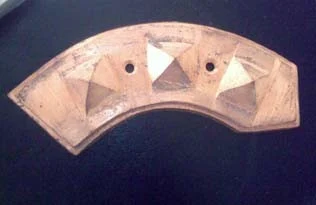
4.A main door that opens clockwise is traditionally preferred in Vastu, as it symbolises smoother movement, harmony, and steady progress in personal and professional life.
 |
| Clockwise Pyramid Arrow |
5. A fractured
or compromised primary entrance establishes an unfavorable initial perception
and, according to Vastu principles, signifies that the residence's defensive
and abundant energy requires consideration.
Maintain the entry point in robust
condition with regular polishing and upkeep, address fissures, deteriorating
finishes, unstable hardware, or structural impairment without delay to ensure
your residence maintains an atmosphere of security, dignity, and readiness to
receive favorable prospects.
6. The primary
entrance ought to be substantially larger and more visually prominent than
interior doorways, thereby emphasizing its significance as the residence's
principal portal for hospitality, circulation, and beneficial energy flow.
A
magnificently scaled and appropriately proportioned main entrance fosters an
impression of spaciousness and affluence, while simultaneously establishing the
entryway as a commanding emblem of security and financial success.
7. It is
advisable to refrain from positioning a blank wall directly across from the
primary entrance. According to Vastu principles, an unobstructed vista or passageway
in the forward direction facilitates the natural circulation of fresh air,
natural illumination, movement, and beneficial energy throughout the residence.
An unimpeded forward passage establishes an inviting atmosphere of openness and
spaciousness, whereas a proximate wall may render the entrance appear confined,
constrained, and aesthetically burdensome.
8. According to
Vastu principles, the primary entrance must maintain brightness and openness,
remaining unobstructed by persistent shadows cast by vegetation, elevated
structures, religious buildings, or comparable constructions, as such shadows
can impart a burdensome quality and diminish the entrance's hospitable
character.
The entrance should be afforded sufficient natural illumination or
supplementary warm artificial lighting, thereby establishing an encouraging,
clearly visible, and welcoming passage that facilitates the flow of positive
energy and facilitates the manifestation of new possibilities.
9. According to Vastu principles, the main door should be
slightly raised above ground level, giving the entrance a sense of elevation,
strength, and welcome rather than making it feel sunken or burdened.
10. According to
Vastu principles, refrain from installing an underground tank, septic tank,
drain, or canal directly beneath the main entrance, as this area is regarded as
a sensitive zone that must maintain a sense of stability, cleanliness, and
elevation rather than appearing heavy, damp, or connected to waste materials.
Equally important, a deteriorated or compromised structure positioned directly
in front of the entrance can project an image of deterioration and impediment;
ensure that the forward-facing view remains luminous, properly maintained, and
inviting to cultivate a more favorable and harmonious environment throughout
the residence.
11. According to
Vastu principles, it is advisable to refrain from positioning three doors in a
linear arrangement extending from the primary entrance, as this configuration
is believed to create an accelerated pathway through which beneficial energy
may rapidly exit the residence rather than remaining in a state of equilibrium
throughout the interior spaces.
Implementing a barrier such as a screen,
divider, drape, or strategically positioned furnishings can effectively disrupt
this direct line of sight, thereby facilitating a more gentle, harmonious
circulation of energy and enhancing the overall sense of seclusion within the
dwelling
12. It is
advisable to refrain from displaying imagery depicting fear, anger, conflict,
sorrow, violence, decay, or negativity upon the primary entrance, as this
threshold should convey tranquility, dignity, and hospitality.
According to
Vastu, the visual elements positioned at your doorway establish the
emotional atmosphere for all individuals who enter the residence and should
consequently evoke feelings of elevation, safeguarding, and equilibrium.
Instead, select refined, sophisticated symbols or artistic compositions that
embody affirmative qualities, financial abundance, auspicious fortune, and
cordiality.
13. A threshold,
alternatively referred to as a dehleez, constructed from marble or wood, holds
traditional significance in Vastu as an elegant demarcation that distinguishes
the external surroundings from the safeguarded energy within your residence.
Maintain it in a clean, robust, and well-maintained condition, as doing so
strengthens the entrance's capacity to convey stability, dignity, and
hospitality.
The Umbra Patti, or threshold, should never be left broken, cracked, or damaged, as it represents the protective boundary of your home’s main entrance in Vastu.
Repair or replace it promptly to restore a strong, clean, and welcoming gateway for harmony, security, and positive energy.
14. Refrain from
positioning footwear in a disorganized manner directly before the primary
entrance, as such placement creates an unkempt appearance and may impede the
unobstructed, favorable circulation of energy throughout the residence.
Store
shoes in an orderly fashion within a clean, enclosed storage unit positioned
adjacent to the entry point, thereby preserving the doorway's openness,
aesthetic appeal, and welcoming character
15. A sacred
symbol, prayer, yantra, or faith-based inscription placed respectfully above
the main door can create a sense of protection, gratitude, and spiritual
welcome for everyone entering the home.
Whether it is a copper Swastika, a religious verse, an Om, a cross, or a
Quranic inscription, it should reflect the family’s own faith and be kept
clean, dignified, and appropriately positioned.
In Vastu practice, such a symbol is treated as a positive intention at the
entrancereminding the household that peace, blessings, and good values are
always welcome within.
16.Install a refined, sophisticated nameplate at your entrance
to establish a distinctive residential identity and project an assured,
inviting initial impression.
To achieve optimal Vastu harmony, choose your
material including wood, metal, ceramic, or premium acrylic based on your
primary entrance's orientation and guidance from a expert Vastu consultant.
17. The
installation of a delicate Vastu bell upon the interior handle of the primary
entrance is conventionally understood to stimulate beneficial vibrations each
time the door is opened or closed.
Its melodious tone has the capacity to imbue
the entryway with vitality and auspiciousness, thereby symbolically welcoming
favorable fortune, abundance, and balanced energy throughout the residence.
18. According to Vastu principles, an arched main door is generally avoided because a simple rectangular or square shape is considered more balanced, stable, and supportive for the home’s entrance energy.
19. According to
Vastu principles, it is advisable to refrain from positioning a mirror in
direct alignment with the primary entrance, as this placement is believed to
deflect beneficial energy and favorable prospects outward before they become
established within the residence.
Instead, consider installing the mirror on an
adjacent wall, where it may enhance the luminosity of the entry area and foster
a sense of expanded space while avoiding direct reflection of the entrance
itself.
20. It is
advisable to refrain from positioning an overhead beam in direct alignment with
the primary entrance, as Vastu principles regard such placement as introducing
visual weight that may cause the entryway to appear constrained and diminish
its welcoming quality.
In instances where removal cannot be feasibly executed,
the implementation of a thoughtfully designed false ceiling or ornamental panel
may serve to mitigate the beam's visual impact and enhance the brightness and
openness of the entrance. Alternatively, affixing a magnetic swastika symbol to
the beam presents an additional remedial approach.
21. The external staircase must be planned carefully, as its direction and position can either support stability or disturb the free flow of energy at the entrance.
In Vastu, stairs should not directly face or block the main door; their placement should be assessed according to the property’s directions, layout, and entrance location for the most suitable result.


